
Intravenous Amiodarone in Pre-excited Atrial Fibrillation: Is It Really Dangerous?
Current guidelines advise against IV amiodarone because of concern that atrioventricular (AV) nodal suppression may promote rapid accessory pathway conduction, potentially precipitating ventricular fibrillation (VF). The authors of this new study, question whether the evidence supporting this contraindication is sufficiently robust.
This is a potentially controversial systematic review, challenging the long-standing recommendation against intravenous amiodarone in patients with pre-excited atrial fibrillation (AF) associated with Wolff–Parkinson–White (WPW) syndrome.
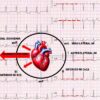
In ordinary AF, the AV node limits how rapidly atrial activity reaches the ventricles. In WPW, a rapidly conducting accessory pathway can permit extremely fast ventricular responses. Pre-excited AF is a particularly dangerous arrhythmia because atrial impulses can reach the ventricles through an accessory pathway that bypasses the normal protective filtering of the AV node.
The concern with AV nodal blocking drugs is that preferential conduction through the accessory pathway, may permit extreme ventricular rates and degeneration into VF. Amiodarone is more complicated than a pure AV nodal blocker, however as it has sodium-channel, calcium-channel, potassium-channel and antiadrenergic actions.
THE STUDY
Ali ZS, et al. Intravenous Amiodarone in Preexcited Atrial Fibrillation: A Systematic Review. Circulation: Arrhythmia and Electrophysiology. 2026;19:e014529. Published March 2026.
DOI: 10.1161/CIRCEP.125.014529
What They Did
| Characteristic | Description |
|---|---|
| Study type | Systematic review with Bayesian risk estimation |
| Databases | MEDLINE and EMBASE |
| Search period | Database inception to 3 October 2025 |
| Included studies | 12 |
| Total participants | 177 |
| Clinical safety population | 146 |
| Designs | 7 case reports, 2 observational cohorts, 3 before-and-after interventional studies |
| Primary outcome | VF or ventricular rate acceleration during or shortly after IV amiodarone |
| Additional outcomes | AV nodal and accessory pathway refractory periods |
| Additional component | Survey of antiarrhythmic availability in Latin American EDs |
Two populations were studied:
- patients with ECG-confirmed pre-excited AF treated with IV amiodarone, and
- patients undergoing electrophysiology testing with measurement of pathway refractoriness before and after amiodarone.
The authors used ROBINS-I to assess bias in nonrandomised studies and a modified Newcastle–Ottawa approach for case reports.
Importantly, there were no randomised controlled trials and no concurrent control groups. This means the review is predominantly a synthesis of uncontrolled observational evidence rather than a comparative assessment of amiodarone against alternative treatments.
What They Found
A. The three principal clinical safety studies
| Study | Patients | Sinus rhythm with amiodarone | VF / acceleration |
|---|---|---|---|
| Alizadeh et al. (2022) | 103 | 19 (18.4%) | 0 |
| Ren et al. (2020) | 30 | 18 (60%) | 0 |
| Acharya et al. (2020) | 13 | 11 (84.6%) | 0 |
| Total | 146 | 48 (32.9%) | 0 |
The 32.9% figure is a crude pooled proportion, not a formal meta-analytic estimate. These studies had different patient populations, protocols and definitions of treatment success.
Alizadeh et al. — 103 patients
This was the largest study and contributed approximately 71% of the safety population.
Patients with spontaneous or induced pre-excited AF received 300 mg IV amiodarone over 30 minutes. No ventricular acceleration or VF was identified during the two-hour observation period.
Important methodological problem: Patients requiring cardioversion within 30 minutes of infusion were excluded. This could systematically remove patients experiencing early treatment failure or deterioration.
Consequently, this study provides less reassurance about safety than its sample size might initially suggest.
Ren et al. — 30 patients
This retrospective cohort included patients presenting to the ED with ECG-confirmed pre-excited AF. No ventricular arrhythmia or rate acceleration was observed.
Acharya et al. — 13 patients
Thirteen haemodynamically stable patients received IV amiodarone as first-line treatment.
Eleven (85%) converted to sinus rhythm. The remaining two developed hypotension and required electrical cardioversion.
No ventricular arrhythmias were reported.
The very high conversion rate contrasts markedly with Alizadeh’s 18.4%. This heterogeneity is important and suggests that patient selection, clinical circumstances and study protocols may substantially influence apparent treatment effectiveness.
What do these studies establish?
They show that IV amiodarone has been administered to selected patients with pre-excited AF without observed malignant ventricular arrhythmias in these cohorts.
Four case reports
The authors identify four published cases of ventricular rate acceleration or VF temporally associated with IV amiodarone.
| Case | Initial findings | After amiodarone | Outcome |
|---|---|---|---|
| Schützenberger et al. | AF, 140 bpm; SPERRI 300 ms | Rate increased to 210 bpm; SPERRI shortened to 240 ms | Hypotension, subsequent sinus rhythm |
| Scheinman & Evans | AF, 130–170 bpm | Rate increased to 230 bpm several hours later | Sinus rhythm after disopyramide |
| Boriani et al. | AF, 250 bpm; SPERRI 190 ms | Deteriorated into VF | Electrical cardioversion |
| Leiria et al. | AF, 157 bpm | Deteriorated into VF shortly after IV bolus | Electrical cardioversion |
Why these cases cannot simply be dismissed
The two VF cases are particularly relevant because they document deterioration shortly after amiodarone administration, although they do not prove causality. The Leiria case involved a haemodynamically stable patient who developed VF within minutes of receiving 150 mg IV amiodarone over 10 minutes.
The Schützenberger and Scheinman cases involved other antiarrhythmic agents, making it difficult to isolate amiodarone’s effects.
The authors reasonably identify confounding from polypharmacy, particularly prior class I antiarrhythmics and verapamil. However, this explanation is more convincing for the two rate-acceleration cases than for the two VF cases.
The Bayesian analysis: what does zero events really mean?
Among the 146 patients included in the clinical safety studies, there were zero observed VF or ventricular rate acceleration events. The authors used a beta–binomial Bayesian model to estimate event risk despite observing no events.
Reported estimates
| Prior assumption | Estimated risk | 95% credible interval | Probability true risk ≤1% |
|---|---|---|---|
| Uniform | 0.68% | 0.02–2.48% | 77% |
| Jeffreys | 0.34% | ~0–1.70% | 91% |
| Skeptical | 0.12% | ~0–0.91% | 98% |
Percentages are model-derived estimates, not observed event rates.

The estimates depend on the assumptions used in the Bayesian model.
Interpretation of the statistical findings
There are three important issues.
- The sample size is too small to exclude rare catastrophic harm. A complication occurring in one of every 500 or 1,000 patients could easily be missed.
- The model assumes exchangeability of different study populations, ie., induced AF in an electrophysiology setting and clinically presenting AF in ED patients. The underlying risk may not be identical.
- The four adverse case reports are not incorporated as events in the 146-patient denominator. That is methodologically understandable because case reports lack a defined population denominator. However, the resulting Bayesian estimates describe the event risk inferred from the selected cohorts, not all published clinical experience.
No adverse events were observed in 146 cohort patients, but the available evidence remains compatible with a clinically important low-frequency risk.
Electrophysiological findings: the most interesting part of the paper
The authors also reviewed three before-and-after electrophysiology studies examining the effects of IV amiodarone on both AV nodal and accessory pathway refractoriness.
What is the accessory pathway effective refractory period?
The accessory pathway anterograde effective refractory period (AP-AERP) is the shortest coupling interval at which an atrial impulse can still conduct down the accessory pathway.
A shorter refractory period allows more rapid ventricular activation during AF.
A drug that prolongs the AP-AERP should, physiologically, limit the maximum frequency at which the accessory pathway conducts impulses.
Findings
| Study | AV nodal ERP increase | Accessory pathway ERP increase |
|---|---|---|
| Alizadeh | +42 ms | +22 ms |
| Wellens | +39 ms | +40 ms |
| Kuga | +47 ms | +28 ms |
All three studies reported statistically significant prolongation of both AV nodal and accessory pathway refractory periods.
Mean change in milliseconds; values rounded from the reported study results.
 ■ AV node
■ Accessory pathway
Why is this important?
The conventional concern is that amiodarone may preferentially block the AV node while leaving accessory pathway conduction relatively unaffected, is challenged here. Amiodarone appears to increase refractoriness in both pathways. Two studies however, demonstrated a greater increase in AV nodal refractoriness than accessory pathway refractoriness.
This differential effect may remain important in determining how ventricular activation occurs during AF.
Furthermore, prolongation of the AP-AERP in a controlled electrophysiology study is a surrogate outcome. It does not establish that VF cannot occur in the clinical setting.
A proposed alternative mechanism of proarrhythmia
The authors suggest another mechanism that deserves attention. Amiodarone may slow and organise atrial fibrillatory activity sufficiently that atrial impulses can begin conducting more consistently through the accessory pathway. If the atrial cycle length approaches or exceeds the accessory pathway refractory period, rapid or potentially 1:1 conduction may become possible.
This mechanism could explain ventricular acceleration without requiring amiodarone to shorten accessory pathway refractoriness.
However the electrophysiological effect of a drug on an accessory pathway is not necessarily equivalent to its clinical effect on ventricular rhythm during AF.
Strengths and weaknesses
Strengths
-
Addresses a clinically important question with direct implications for emergency medicine.
-
Systematic searching of MEDLINE and EMBASE, with independent screening and formal risk-of-bias assessment.
-
Separates adverse case reports from defined clinical cohorts.
-
Incorporates electrophysiological data rather than considering clinical outcomes alone.
-
Uses Bayesian modelling to quantify uncertainty associated with zero observed events.
-
Identifies an important discrepancy between guideline-recommended treatment and medication availability in some settings.
Weaknesses
-
Only 146 patients contribute to the clinical safety estimate.
-
No randomised trials or comparative treatment groups.
-
Serious confounding in the clinical safety studies.
-
Exclusion of early cardioversion patients in the largest study.
-
Variable patient stability, treatment protocols and follow-up.
-
Insufficient data to determine safety in patients with very short SPERRI or severe haemodynamic compromise.
-
Four published cases of deterioration remain clinically concerning.
-
The Bayesian estimates are sensitive to prior assumptions and the assumption of a common underlying event risk.
-
The electrophysiological findings are surrogate outcomes, not definitive clinical safety outcomes.
10. Does this paper change the guidelines?
The review discusses the 2023 ACC/AHA/ACCP/HRS Atrial Fibrillation Guideline and the 2019 ESC Supraventricular Tachycardia Guideline.
The central recommendations described in the paper remain:
| Clinical situation | Guideline-based approach |
|---|---|
| Haemodynamically unstable pre-excited AF | Immediate synchronised electrical cardioversion |
| Stable pre-excited AF requiring pharmacological conversion | IV procainamide or IV ibutilide |
| IV amiodarone | Contraindicated / potentially harmful |
| AV nodal blocking drugs | Avoid agents such as beta-blockers, diltiazem, verapamil and digoxin |
| Definitive management | Electrophysiology assessment and accessory pathway ablation |
These are the guideline recommendations as discussed in the paper, not an independently verified October 2026 guideline update.
Should we now use IV amiodarone?
The evidence in this review is insufficient to demonstrate safety in the full population of patients presenting with pre-excited AF, particularly those with rapid ventricular conduction, haemodynamic compromise or a high-risk accessory pathway.
The paper provides a rationale for further investigation, not proof of therapeutic equivalence.
Take-home messages
-
The guideline contraindication is based on limited evidence, including individual case reports, but those reports describe potentially catastrophic events.
-
Zero adverse events in 146 patients does not prove safety. The available data cannot exclude clinically important rare harm.
-
IV amiodarone prolongs accessory pathway refractoriness, challenging the idea that its only relevant acute effect is AV nodal suppression.
-
Clinical efficacy is variable. The largest study reported pharmacological conversion in fewer than one in five patients.
Electrical cardioversion and guideline-recommended agents remain the preferred treatments. This review does not justify routine IV amiodarone for pre-excited AF.
A question to consider…
If a treatment is contraindicated because of four published adverse cases, but 146 subsequently studied patients experience no ventricular arrhythmias, have we demonstrated that the contraindication is wrong — or simply that we still do not know the true risk?
I would not use it in AF with WPW unless I have a RCT, telling me its safe.