A 48 yo male presents with exertional squeezing central chest pain, with no radiation, of two hours duration. He has had multiple episodes over the last few months, both on exertion and at rest and has presented to the emergency department. In all cases, he had short stay admissions and normal serial troponins. He had been scheduled for an exercise stress test, which he has not booked yet.
His past medical history includes hypertension and hypercholestarolaemia and he is a smoker. He also has an extensive family history of heart disease. He is treated with 300mg of aspirin on arrival to the emergency department and following sublingual GTN, the symptoms are totally relieved. Today his ecg shows a sinus tachycardia with some non-specific T-wave changes on ECG, which normalise as the pain is relieved.
There is a non-delta significant rise in troponin, that on repeat, normalises. The patient is admitted due to the dynamic changes, the risk factors and the story. He has repeated episodes of chest pain and the next day undergoes a cardiac angiogram, which is normal. He is discharged with education, new medications and scheduled close followup.
His provisional diagnosis is Cardiac Syndrome , however needs to undergo further testing.
What is Cardiac Syndrome X?
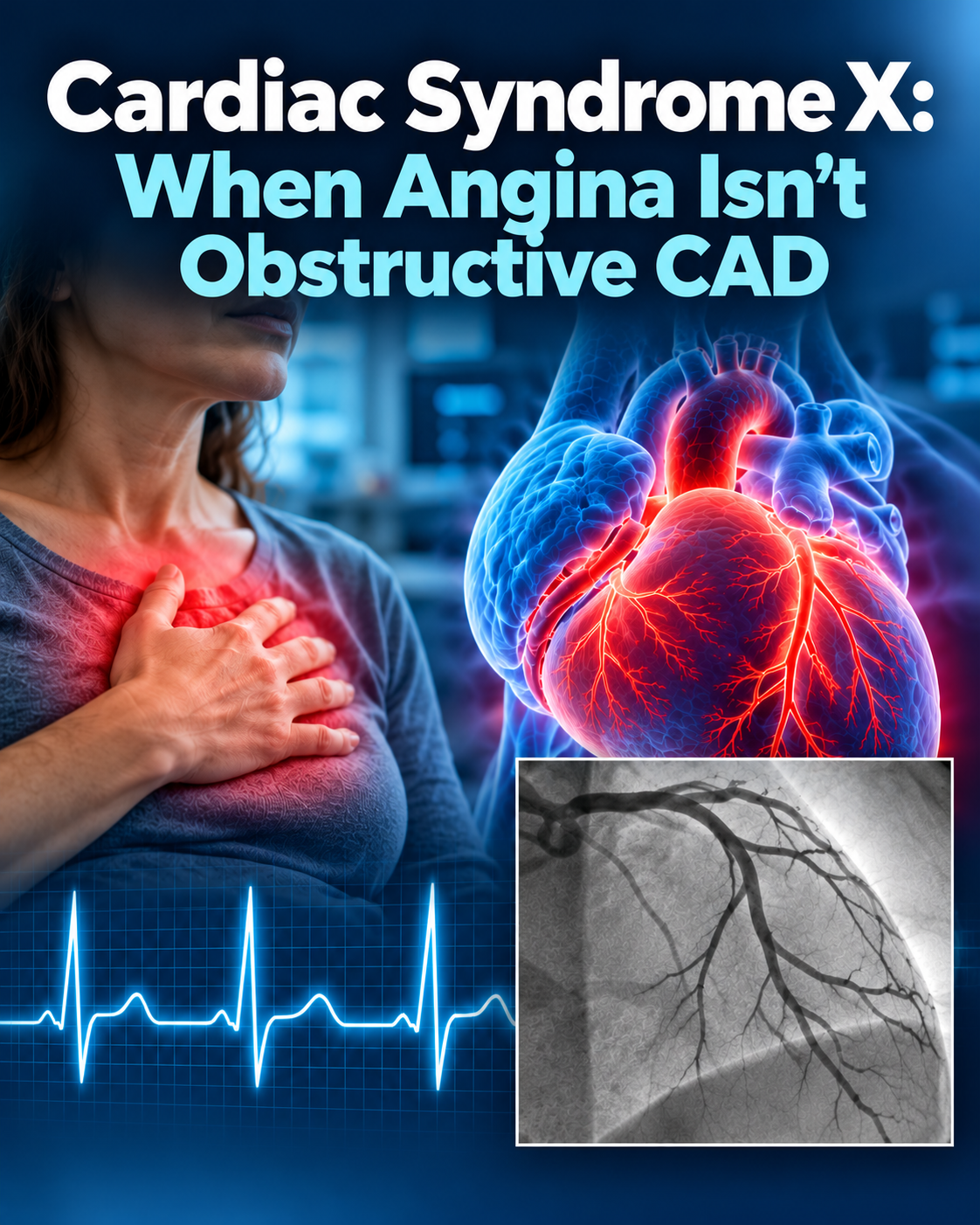
It is a diagnosis of exclusion and comprises both exercise-induced chest pain and chest pain at rest, with ECG changes of ST depression, but with a normal (or insignificant changes) on coronay angiogram. It is more common in females, especially in perimenopausal or postmenopausal females, however it also occurs in males.
The pathogenesis is not fully understood, but believed to be related to microvascular angina, through microvascular dysfunction of the coronary vessels. Another theory relates to increased cardiac pain sensitivity. Risk factors for the development of the disease may include insulin resistance and hyperglycaemia, smoking, hypertension and hyperlipidaemia.
How is it diagnosed?
It is a diagnosis of exclusion.
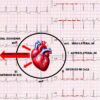
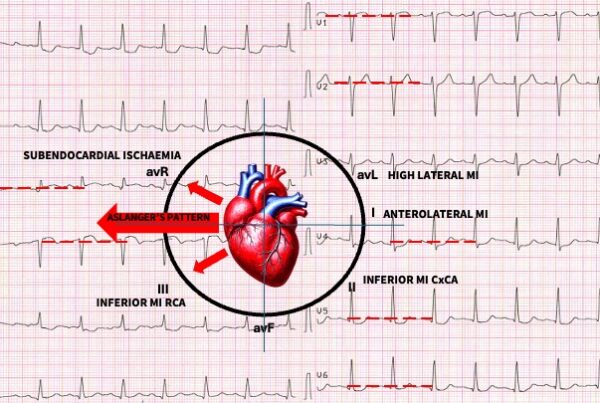
Troponins can be normal, however there will be ECG changes. Typical ECG changes are ST depression, however fragmented QRS has also been shown to be associated with the condition(see below). Holter monitoring has shown that some patients develop ST depression transiently and in some cases it is not related to the chest pain.
Myocardial perfusion scan can be of great value and may be positive for ischaemia, in the presence of reversible ecg changes and a normal angiogram, helping make the diagnosis. Exercise stress tests and stress echocardiography can also assist, by not demonstrating any left ventricular contractile abnormalities in the presence of chest pain with ecg changes.
Patients can also undergo coronary vessel reactivity testing and assessment of flow, to exclude other causes of microvascular dysfunction including vasopsasm, low flow, Takotsubo, amyloid induced heart disease, as well as rarer causes. Causes of non-cardiac chest pain must be ruled out.
Below are examples of ECG changes
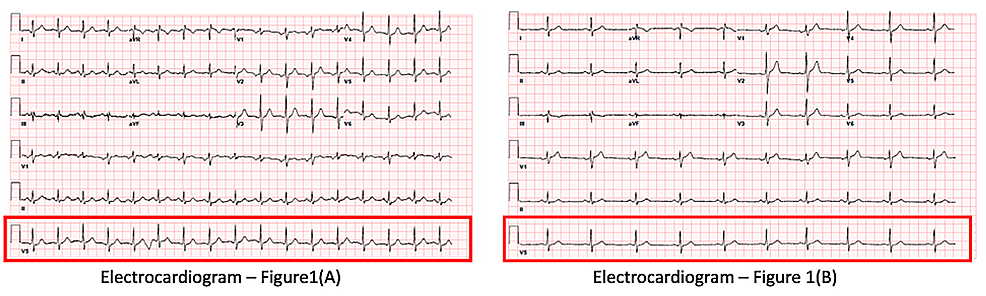
(2)
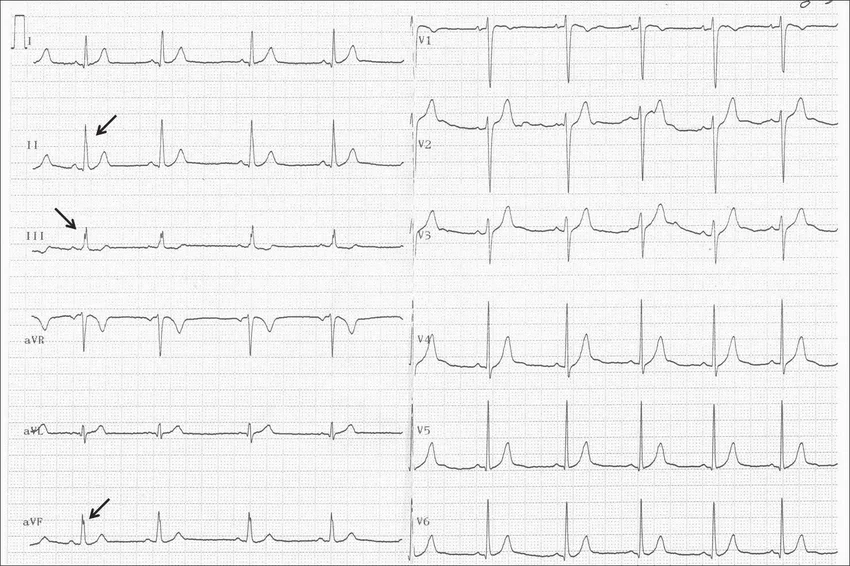
(4) Fragmented QRS
How is it Treated?
- Sublingual nitrates are used as intitial treatment, although these may not work in all cases.
- Beta blockers are shown to be effective and improve symptoms and exercise tolerance. They are used in combination with nitrates.
- Calcium Channel Blockers: Can be used if beta blockers are contraindicated, although don’t appear to be as effective.
- Statins can have a direct effect on endothelial vasodilatory effects.
- ACE Inhibitors: also result in vasodilatation.
- Tricyclic antidepressants and Selective serotonin reuptake inhibitors decrease the frequency of chest pain.
- Lifestyle changes: smoking cessation, weight loss and exercise are a critical part of management.
Outcomes
Although initially thought to be a benign condition with no effect on morbidity or mortality, it is now known that the disease may be progressive and may also result in myocardial infarction, heart failure and stroke. It can of its own have significant effects on
References
- Agrawal S et al. Cardiac Syndrome X-Update 2014. Cardiol Clin. 2014 Jun 2;32(3):463–478
- Jha S. Cardiac Syndrome X: The Sensitive Heart of a Young Adult Man. Cureus. December 24, 2021 13(12): e20669. doi:10.7759/cureus.20669
- Mahtani AU, et al. Cardiac Syndrome X. [Updated 2023 Jun 3]. In: StatPearls [Internet]. Treasure Island (FL): StatPearls Publishing; 2023 Jan.
- Damar IH et al. Fragmented QRS frequency in patients with cardiac syndrome X. Poster presentation at 30th National Cardiology Congress, October 23–26, 2014 in Antalya, Turkey.
You may also find this review helpful: Fragmented QRS