Only 0.7% of patients who present with solitary vertigo, dizziness or imbalance and no neurology on examination, have a stroke or TIA (1). This gives us greater confidence in diagnosing patients with solitary vertigo as BPPV and discharging them.
This may not be accurate.
We know that difficulty standing or truncal ataxia is associated with a central causes. The more severe the ataxia and imbalance, the more likely the cause is central. Therefore imbalance may help us.
Does the presence of nystagmus help us?
(2)
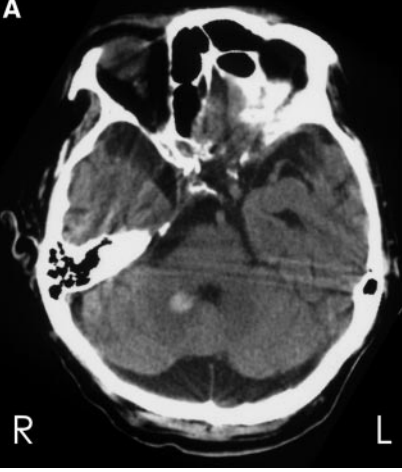
Do all patients with vertigo and only positional nystagmus have a peripheral aetiology ie., BPPV? Not necessarily. A tumour or haemorrhage or lesion in the dorsal vermis of the cerebellum on the dorsolateral region of the 4th ventricle, can cause isolated dizziness and positional nystagmus, termed Central Positional Vertigo (CPV), similar to that seen in BPPV. (3)
Differentiating central positional vertigo from BPPV can be challenging. Perhaps one key way to differentiate is to look for nystagmus occurring in a direction not related to the semicircular canal stimulated.
Nystagmus due to CPV(3):
- Usually has no latency compared to BPPV
- Is usually not fatiguable
- Is not affected by fixation
- May be purely vertical/torsional
- Is consistently reproducible.
References
- Kerber KA, et al. Stroke among patients with dizziness, vertigo, and imbalance in the emergency department: a population-based study. Stroke. 2006;37: 2484 –2487
- Johkura K. Letters to the Editor: Central Paroxysmal Positional Vertigo: Isolated Dizziness Caused by Small Cerebellar Hemorrhage. Stroke. 2007;38:e26-e27.
- Tae-Kyeong, L. Central Positional Vertigo. Research in Vestibular Science Vol. 10, Suppl. 1, June 2011