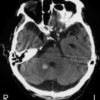
Spontaneous intracerebral haemorrhage causes up to 20% of srokes, yet is responsible for nearly half of all stroke deaths.
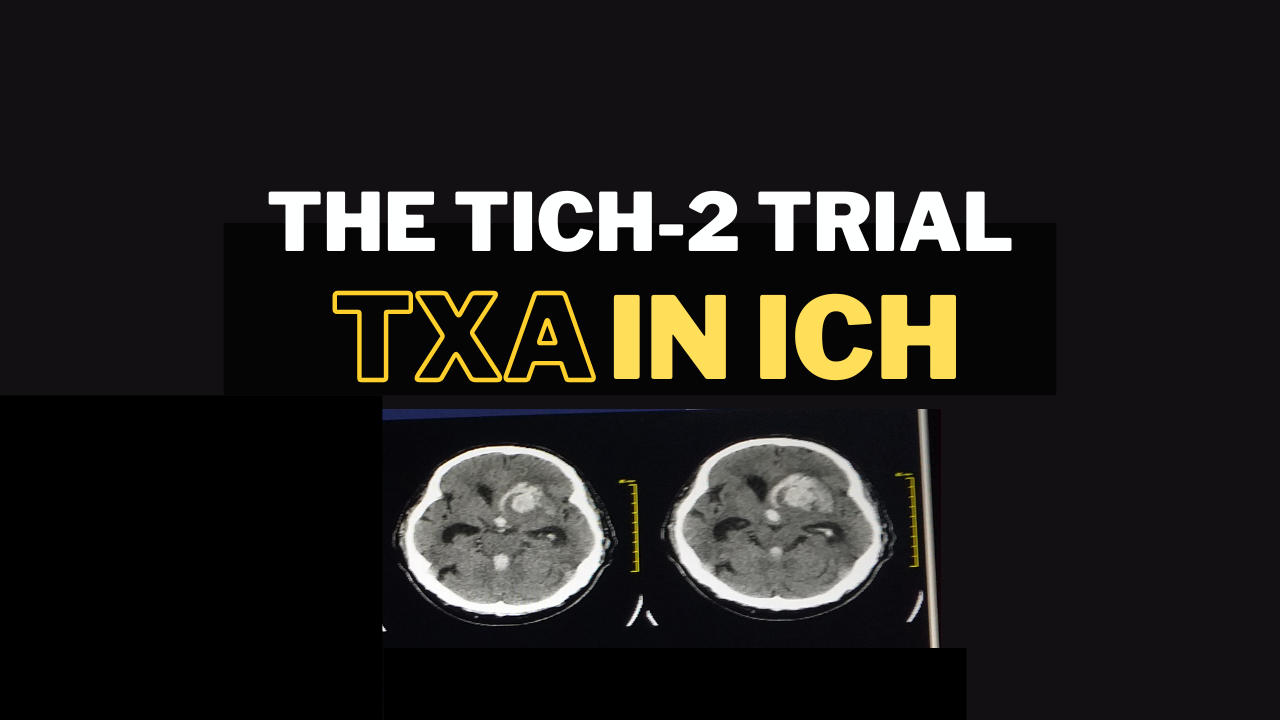
The Tranexamic acid for hyperacute primary IntraCerebral Haemorrhage (TICH-2) trial tested the hypothesis that intravenous tranexamic acid reduces death and dependence when given within 8 h of spontaneous intracerebral haemorrhage.
The Study
Sprigg N et al. Tranexamic acid for hyperacute primary IntraCerebral Haemorrhage (TICH-2): an international randomised, placebo-controlled, phase 3 superiority trial. The Lancet 2018; 391: 2107–15
What They Did
This was a double-blind, randomised, placebo-controlled, parallel group, phase 3 trial at 124 hospitals in 12 countries.
Patients were included if they were adults and were admitted within 8 hours. Patients were excluded if they had an intracerebral bleed due to anticoagulation, thrombolysis, trauma, or a known underlying structural abnormality.
The intervention was 1g of IV tranexamic acid over 10 minutes, followed by another 1 g in over 8 h. The placebo was normal saline.
Primary Outcome was functional status at day 90 assessed with the modified Rankin Scale (mRS).
Secondary Outcomes included neurological impairment at day 7 or discharge and change in haematoma volume from baseline to 24 h.
N = 2325.
What They Found
The primary outcome showed no difference in the distribution in the mRS at day 90 after adjustment for stratification and minimisation criteria. There was no difference between the groups in the proportion of participants who were dead or dependent at day 90 (mRS >3) and the aOR was0·82 (95% CI 0·65–1·03, p=0·08;).
There was a significant interaction between mRS and baseline systolic blood pressure, with those with a baseline systolic blood pressure less than or equal to 170 mm Hg had a favourable shift in mRS with tranexamic acid compared with those with a systolic blood pressure greater than 170 mm Hg.
Less patients in the tranexamic acid group had haematoma expansion at day 2. Neurological impairment did not differ between the two groups nor did survival at 90 days.
There was no increase in serious adverse effects, such as venous thromboembolism with tranexamic acid.
My Take on This
We see in this phase 3 trial that although tranexamic acid resulted in less deaths and and a reduction in haematoma formation, there was no difference in functional outcomes. This may in part be due to the extended time for recruitment into the study (8 hours). It is yet another study showing no benefit.
Related reading to this post is the STOP-MSU Trial.